Rent to own furniture options UK exist across consumer and B2B markets, but qualified operators need lease-to-own FF&E structures built for multi-unit, contract-grade deployment.
- Consumer RTO providers (BrightHouse successors, Rent-A-Center style models) are designed for individual households, not serviced apartments or BTR portfolios
- Professional operators should evaluate lease-to-own FF&E agreements that include bulk specification, installation, and end-of-term asset transfer
- The right structure preserves capital, keeps furniture off the balance sheet, and aligns cost with revenue generation
Most searches for rent to own furniture options UK land on consumer credit pages built for someone furnishing a single bedroom on a tight budget. That is the wrong market entirely if you are managing a serviced apartment portfolio, a PBSA scheme, or a BTR development with dozens of units to outfit before launch.
The gap between consumer RTO and professional FF&E procurement is wider than most operators realise, and the cost of bridging it with the wrong solution compounds fast across every unit in a scheme.
This article maps where the consumer market ends, where genuine B2B lease-to-own models begin, and what distinguishes a procurement structure that actually works for institutional real estate from one that simply borrows the same language.
Why Most Rent to Own Furniture Options in the UK Miss the Mark for Operators
However, most rent to own furniture options in the UK are built for one person buying a sofa on weekly payments, not for an asset manager furnishing 80 BTR units before a lease-up deadline. The gap between consumer retail-to-own models and genuine professional FF&E procurement is real, and operators who discover this late pay for it in downtime, inconsistency, and fragmented supplier relationships.

The consumer RTO market vs. Professional FF&E reality
Consumer-facing rent-to-own providers focus on individual appliances and standalone pieces, typically priced around £200 per month for a one-bedroom pack according to industry commentary in The Negotiator. That model serves a household.
It can't deliver multi-unit consistency, auditable inventory, or operational readiness within 48 hours across a portfolio.
What procurement teams and asset managers actually need
Professional operators need a fundamentally different offer, because the real question is never "can you deliver a sofa?", it's whether the provider supports operational readiness at scale.
Procurement teams need:
- Flexible procurement across 10,000+ items with consistent specification
- Capex-to-opex commercial flexibility, rental, lease-to-own, or outright purchase
- Digitally governed inventory, traceable and auditable per unit
- Pan-European consistency rather than fragmented local sourcing
Myotaku is built precisely around this operational model, not the consumer RTO category.
5 Criteria That Separate a Professional FF&E Partner from a Consumer RTO Provider
Most procurement teams discover the difference too late: a consumer rent-to-own provider ships a sofa; a professional FF&E partner delivers operational readiness. When evaluating rent to own furniture options UK, these five criteria separate partners who can perform at scale from those who cannot.

Criteria 1-3: Speed, Scale, and Commercial Flexibility
- Criterion 1, Speed to operational readiness. Can the provider furnish a complete unit within 48 hours? For serviced apartment operators and BTR developers, every vacant day is lost revenue. Myotaku's Signature 48 commitment delivers zero downtime furnishing, a standard most consumer-facing providers cannot match.
- Criterion 2, Commercial model flexibility. Rental, lease-to-own, and outright purchase should be switchable within a single contract, not siloed into separate offerings. Operators whose occupancy cycles shift from short-term to long-term need that flexibility without renegotiating from scratch.
- Criterion 3, Scale and multi-site consistency. A catalogue of 10,000+ items and the ability to furnish properties consistently across London, Manchester, Birmingham, Leeds, and Bristol is non-negotiable for institutional operators. Fragmented local sourcing creates specification drift and audit headaches.
Criteria 4-5: Digital Governance and End-of-Life Management
- Criterion 4, Digital governance. QR-coded inventory per unit, traceable and auditable FF&E management, and digital catalogues eliminate manual workflows. For CFO-level sign-off, transparent predictable cost structures with no hidden operational costs are the baseline expectation.
- Criterion 5, End-of-life responsibility. Removal, recycling, and replacement must be built into the contract, not invoiced as extras. Providers who charge separately for collection are shifting operational risk back onto the asset manager.
Applying these criteria to the broader rent to own furniture options UK market quickly narrows the field. Speak with Myotaku's team at myotaku.co.uk to assess how each criterion maps to your portfolio requirements.
Lease-to-Own vs. Pure Rental vs. Outright Purchase, Which Model Fits Your Portfolio?
Three models exist in the UK FF&E market. Most operators default to one without stress-testing it against their actual hold strategy, and that decision quietly erodes yield. Here's a direct comparison across the three commercial models.
Built for asset managers and operators who need the right answer before committing capital.

Outright Purchase: full ownership, full capex exposure
Buying outright suits stable, long-term assets where depreciation is predictable and the balance sheet can handle the upfront commitment. The trade-off is inflexibility if occupancy cycles shift or the asset is repositioned within three to five years.
The sunk cost becomes a liability rather than an asset. For operators running multiple units across London or Birmingham, tying up capital in furniture limits deployment elsewhere.
Pure Rental: opex-friendly, maximum operational flexibility
Rental converts furniture spend into a clean operating expense, a real advantage when reporting yield metrics to institutional investors. Industry commentary cited in The Negotiator shows one-bedroom packages starting from around £200 per month for shorter tenancies, with multi-year terms cutting unit costs substantially.
Wear-and-tear responsibility shifts to the provider, which matters at scale across BTR and serviced apartment portfolios.
Lease-to-Own: when the 2-5 year hold strategy changes the maths
Lease-to-own spreads cost across the contract term whilst building toward asset ownership, the strongest model for operators with a defined hold period who want opex treatment in early years without permanently foregoing the asset. Among the rent to own furniture options UK operators can access at a professional scale, this structure is genuinely rare.
Most providers offer rental only.
Myotaku's commercial model is deliberately flexible: start on a short-term rental as a unit stabilises, then shift to lease-to-own once occupancy confirms the long-term thesis.
Operational readiness within 48 hours means the transition never creates downtime. Myotaku tip: Before your next FF&E decision, run the three models against your projected hold period and occupancy rate. Additionally, the model that looks cheapest per month rarely wins on a full-term basis, bring your CFO into the conversation early and contact Myotaku via myotaku.co.uk for a structured cost comparison.
What Other FF&E Providers Won't Tell You About Rent to Own Furniture Options in the UK
The monthly rate looks reasonable. Then the invoice arrives. Meanwhile, across the UK, rent to own furniture options are marketed on headline figures that hide a far messier reality.
One that professional operators discover only after contracts are signed.
- Hidden delivery and removal charges: Many providers quote a per-month rate that excludes delivery, installation, maintenance call-outs, and end-of-term removal. Total cost of ownership rarely appears in a single line.
- "Flexible" contracts with rigid SKUs: Consumer-facing RTO agreements typically lock operators into fixed product lists. Swapping, upgrading, or scaling mid-contract triggers penalties, the opposite of operational flexibility.
- No digital audit trail: Manual inventory management means asset losses and damage disputes fall on the operator. Without QR-coded tracking or a verifiable audit record, accountability disappears the moment a unit changes hands.
- Regional fragmentation: Most UK rent-to-own furniture providers operate in one or two cities. A BTR developer with assets across London, Leeds, and Glasgow will face three suppliers, three delivery standards, and three separate invoicing systems.
Industry commentary in The Negotiator confirms that pricing variation across term and specification is wide. Yet few providers present a consolidated cost structure upfront. As a result, cashflow clarity matters enormously to asset managers and procurement teams; opaque billing erodes it fast.
Myotaku's model is built around the opposite principle: transparent, predictable cost structures with no hidden operational costs, digitally governed FF&E delivery with QR-coded inventory per unit, and pan-European consistency from a single operational partner, whether your portfolio sits in London, Birmingham, or Edinburgh.
One contract. One standard.
Zero downtime furnishing.
How Myotaku Delivers Rent to Own Furniture Options Built Around Real Estate Performance
Myotaku's approach to rent to own furniture options UK operators need starts from a single premise: your furniture strategy should serve your asset, not constrain it. As an operational FF&E partner with roughly 15 years of experience deployed across the UK, Switzerland, and Germany, Myotaku works across four professional verticals where commercial flexibility and speed are non-negotiable.
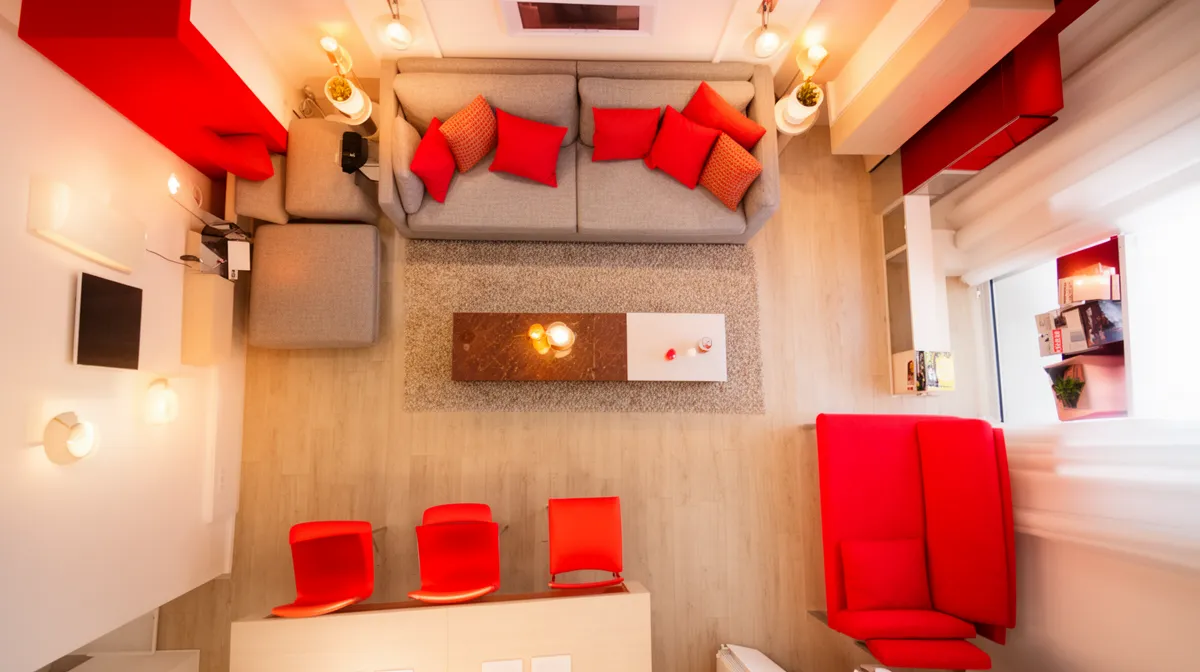
Signature 48: operational readiness without downtime
Signature 48 is Myotaku's core delivery promise: operational readiness within 48 hours, built for immediate occupancy, above all for BTR lease-up campaigns and serviced apartment operators where every vacant day carries a revenue cost. This isn't a convenience, it's a commercial differentiator.
No fragmented local sourcing, no manual coordination delays.
From PBSA and serviced apartments to relocation and home staging
Myotaku covers the full range of professional real estate verticals across the UK.
- Serviced apartments and hospitality: turnkey FF&E packages from a 10,000+ item catalogue, standardised across units
- BTR and PRS: scalable furnishing from a single unit to a 300-apartment block, capex or opex structure
- Relocation: short-term rental through to lease-to-own, aligned with ARP Relocation, ASAP, and EURA Relocation frameworks
- Home staging: design-led packages for developers and estate agencies with time-sensitive sales programmes
Every unit is QR-coded, and inventory is traceable, auditable, and reportable, giving procurement and asset management teams the governance they need.
Commercial models are genuinely flexible: start on rental, convert to lease-to-own, or buy outright. Discuss your portfolio requirements with Myotaku's team at myotaku.co.uk.
FAQ - Frequently Asked Questions
What is the difference between furniture rental and rent to own in a professional property context?
Rental keeps furniture off your balance sheet entirely, you pay a periodic fee. Return the items at contract end, and retain full flexibility to swap, scale, or exit. Lease-to-own, by contrast, builds toward asset ownership over a fixed term.
However, for operators managing short occupancy cycles or high-turnover units, rental is typically the sharper tool. Lease-to-own tends to suit longer-horizon projects where owning the FF&E package eventually makes commercial sense, PBSA blocks or stabilised BTR assets, for instance.
Can a BTR developer use a lease-to-own furniture model across multiple sites in the UK?
Yes, and at scale, it often makes more financial sense than outright purchase. Therefore, a single lease-to-own framework can govern multiple sites simultaneously, with consistent specification across London, Manchester, Birmingham, or any other UK city, rather than negotiating unit by unit with fragmented local suppliers.
At Myotaku, we structure multi-site agreements with standardised FF&E packages, QR-coded inventory per unit, and auditable delivery records across every location. The result is predictable cost structures and operational consistency that procurement teams and asset managers can rely on, not just at launch, but across the full asset lifecycle.
How quickly can a furnished serviced apartment be made operational under a lease-to-own arrangement?
With Myotaku's Signature 48 model, operational readiness within 48 hours is the standard, not the exception, regardless of whether the commercial model is rental, lease-to-own, or outright purchase.
The ownership structure doesn't affect deployment speed. What matters is pre-agreed specification, catalogue depth, and logistics coordination. With 10,000+ items available and digitally managed delivery, a fully furnished.
Immediately occupiable unit is well within reach before standard handover windows close.
What does a professional FF&E lease-to-own contract typically include beyond the furniture itself?
Quite a lot, in practice. A well-structured lease-to-own agreement should cover delivery, installation, and assembly as standard, not as add-ons that inflate the final invoice.
Beyond that, for maintenance and replacement provisions, removal and recycling obligations at end-of-life, and digital inventory governance so every item is traceable throughout the contract term. At Myotaku, the full end-to-end scope, from procurement through to eventual recycling, is built into the agreement from day one.
Hidden operational costs are the most common source of budget overruns we see operators encounter with less structured providers.
Is lease-to-own furniture treated as capex or opex on a real estate operator's balance sheet?
The short answer: it depends on how the contract is structured, and this is worth clarifying with your finance team before signing. Under IFRS 16, lease arrangements that transfer substantially all risks and rewards of ownership are typically capitalised, which means they appear as right-of-use assets and corresponding liabilities on the balance sheet, closer to capex treatment.
Shorter-term or genuinely operational rental structures, however, can qualify for opex treatment, keeping the expenditure off the balance sheet entirely. For CFOs and procurement leads trying to manage capital allocation across a portfolio, this distinction is material.
We recommend operators engage their auditors early in the process, and we're happy to provide the contract documentation needed to support that conversation. Reach out to the Myotaku team via myotaku.co.uk to discuss the right commercial structure for your portfolio.
Choosing the Right Rent to Own Furniture Options in the UK Starts With Asking the Right Questions
The furniture model you choose doesn't just affect your balance sheet, it shapes your operational agility for the next three to five years.
Consumer RTO providers and professional FF&E partners operate in fundamentally different worlds. One serves individuals replacing a sofa; the other serves operators protecting asset performance across an entire portfolio.
The five criteria covered in this article, commercial model flexibility, deployment speed, digital governance, pan-European consistency, and cost transparency, exist precisely because the wrong partner creates friction you won't feel until a unit sits empty or a lease renewal stalls.
If you're evaluating rent to own furniture options in the UK for a serviced apartment portfolio, a BTR scheme, or a multi-site hospitality asset, the decision deserves a senior-level conversation, not a catalogue request.
Myotaku works directly with operators, asset managers, and procurement leads to structure FF&E solutions around your specific portfolio requirements, whether that means lease-to-own, rental, or outright purchase.
Visit myotaku.co.uk to open a direct conversation with the team.
The right FF&E partner doesn't just furnish your assets, it protects them.