A furniture rental delivery and setup service for B2B real estate covers full-cycle logistics: delivery, assembly, styling, and removal handled by a single operational partner.
- Speed to market matters: a professionally managed setup can turn an empty unit into a lettable asset without tying up capital in owned inventory
- Consistency across multi-unit portfolios requires a provider with standardised processes, not a retailer dispatching flat-pack boxes
- The right partner converts furnishing from a capital expenditure into a flexible operational cost, aligned with occupancy cycles
However, most real estate operators discover the gap too late: the furniture arrives, but nobody coordinates the lift access, the floor protection, the assembly sequence, or the styling brief, and the unit sits unready while the tenancy clock runs.
For serviced apartment operators, BTR developers, PBSA managers, and corporate housing teams across Greater London and beyond, a furniture rental delivery and setup service is rarely the commodity it appears to be on a quote sheet. The operational difference between a logistics-led partner and a retail fulfilment model shows up on day one, at scale, across dozens of units simultaneously. What separates a genuinely end-to-end provider from a glorified delivery company is the question this piece addresses, with the specific operational criteria that procurement teams and asset managers should be stress-testing before they sign.
What Separates a Genuine Furniture Rental Delivery and Setup Service from a Basic Hire Offer
Most operators discover the gap too late: they sign with a hire company, the van arrives, flat-pack boxes get stacked in the hallway, and the unit sits unoccupied for three more days. A genuine furniture rental delivery and setup service closes that gap entirely.
The distinction isn't cosmetic: it's operational, and it directly hits rental income from day one.

The five components every operator should demand
Evaluating any provider comes down to five non-negotiable capabilities, and each missing component adds cost, delay, or vendor complexity elsewhere:
- Procurement depthMyotaku's emphasis on digital governance, including QR-coded inventory and digital catalogues, matches a growing operational need in managed real estate for asset control, traceability, and repeatability across multiple units and geographies
- Delivery speed guarantee, operational readiness within 48 hours is the benchmark; anything slower costs occupancy revenue
- Trained installation and assembly, included, not invoiced separately
- Maintenance and replacement protocols, reactive swap-outs without a separate service contract
- Removal and recycling at contract end, closes the asset lifecycle without leaving the operator to manage disposal
Why logistics and assembly are not optional extras
Treating delivery and assembly as add-ons is where basic hire offers break down at scale. When a BTR operator is turning twenty units simultaneously in Birmingham or Manchester, site management overhead climbs fast.
Myotaku's end-to-end model bundles every stage under one contract, one point of contact, and one predictable cost structure, with no hidden operational costs and no fragmented vendor coordination.
The commercial model matters just as much: rental, lease-to-own, and outright purchase under one provider means operators can move between capex and opex models as occupancy cycles shift, without renegotiating from scratch.
The 5 Verticals Where Furniture Rental Delivery Delivers the Most Operational Value
Five distinct professional audiences rely on a fully managed furniture rental delivery and setup service, and each faces a different operational pressure. Here is where the model proves its worth, by vertical.

Serviced apartments and hotels: identical fit-outs, zero downtime
Operators managing dozens of units across London or Manchester can't afford inconsistency between tenancies. Wear, damage, and replacement cycles create constant operational drag. Myotaku emphasizes fast operational readiness and furnishing setup as part of its service, which can help cut void periods between guests, while QR-coded, auditable inventory keeps every unit traceable and standardised at scale.
BTR and PBSA: lease-up speed at scale
Finally, for Build-to-Rent developers and PBSA operators in Birmingham or Leeds, furnished units let noticeably faster than unfurnished stock. The capex-versus-opex question is real here: rental and lease-to-own models turn heavy upfront procurement into manageable operational expenditure. Directly strengthening asset performance metrics for institutional investors.
Relocation: flexibility under genuine pressure
Additionally, corporate assignees and HNWI individuals arriving in London rarely know their exact tenure. Relocation directors need a partner who can furnish a home at short notice and adapt the arrangement as plans shift, from one month to three years.
Myotaku holds memberships with ARP Relocation, ASAP, and EURA Relocation, giving the professional credibility that relocation procurement teams need.
Home staging and diplomatic missions: speed and compliance
Estate agencies and property developers need quick visual impact without permanent ownership, a furniture rental delivery and setup service cuts out the disposal headache entirely. Meanwhile, embassies and permanent missions, by contrast, demand compliance-grade durability and long-term contractual flexibility.
Both audiences are covered through Myotaku's catalogue of 10,000-plus items, adaptable to occupancy cycles and specification requirements alike.
How Myotaku's Setup Service Is Built Around Operational Certainty
Most operators discover the real cost of a slow furnishing partner not during procurement, but on day one of occupancy, when the unit isn't ready. Myotaku's furniture rental delivery and setup service is structured specifically to eliminate that moment.
As a result, the Signature 48 guarantee means full operational readiness, every item delivered, assembled, and positioned, within 48 hours of instruction. For operators managing multiple units across London, Manchester, or Edinburgh, that is not a marketing claim.
It is a contractual operational standard.
What it means in practice
Operational certainty at scale requires more than speed, and it requires a repeatable process.
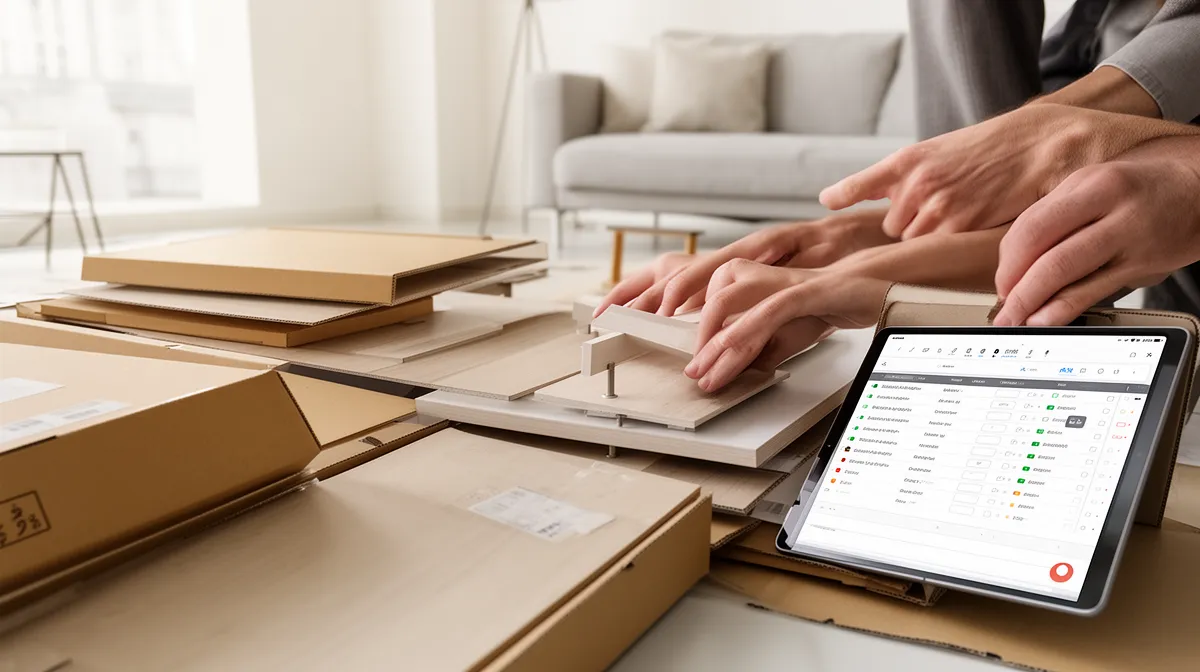
Myotaku's end-to-end model covers procurement from a broad digital catalogue, delivery, installation, assembly, and ongoing maintenance or replacement, all within a single managed service. Operators avoid the fragmented coordination of multiple local suppliers, manual workflows, and the procurement errors that come with them.
For example, repeat orders are accelerated, and downtime between tenancies is reduced to near zero.
QR-coded inventory and auditable unit tracking
Every item in every unit carries a code, making the entire asset register traceable and auditable without guesswork. Damaged item?
The replacement is pinpointed instantly. End-of-term return?
The unit inventory is checked against a digital record, not a handwritten list. For institutional clients managing portfolios across multiple sites, this level of governance is the difference between controlled asset management and reactive firefighting.
The commercial model is equally structured for real decision-makers: rental, lease-to-own, and outright purchase options let operators align furnishing expenditure with their asset strategy, converting capex to opex where needed, a distinction that matters considerably at CFO and procurement approval level.
- Signature 48: Myotaku states it can fully furnish a home in a short timeframe for short-term rentals and offers delivery, setup, and returns as part of the service
- Digital catalogues: eliminate manual sourcing and reduce procurement errors across repeat orders
- QR-coded inventory: every item tracked, auditable, and replaceable at unit level
- Flexible commercial models: rental, lease-to-own, or purchase, matched to your asset strategy
Transparent, predictable cost structures with no hidden operational costs mean budget forecasting holds across the full contract term. Myotaku tip: when evaluating a furniture rental delivery and setup service for a multi-unit portfolio, ask prospective partners for a unit-level asset register and a documented replacement SLA. If neither exists, manual workflows will create operational risk at scale.
What Most Furniture Hire Providers Won't Tell You About Delivery and Setup
Four structural problems lurk beneath the surface of most furniture hire contracts, and procurement teams only spot them after signing. Therefore, knowing them changes how you assess any furniture rental delivery and setup service.
The hidden costs buried in fragmented sourcing
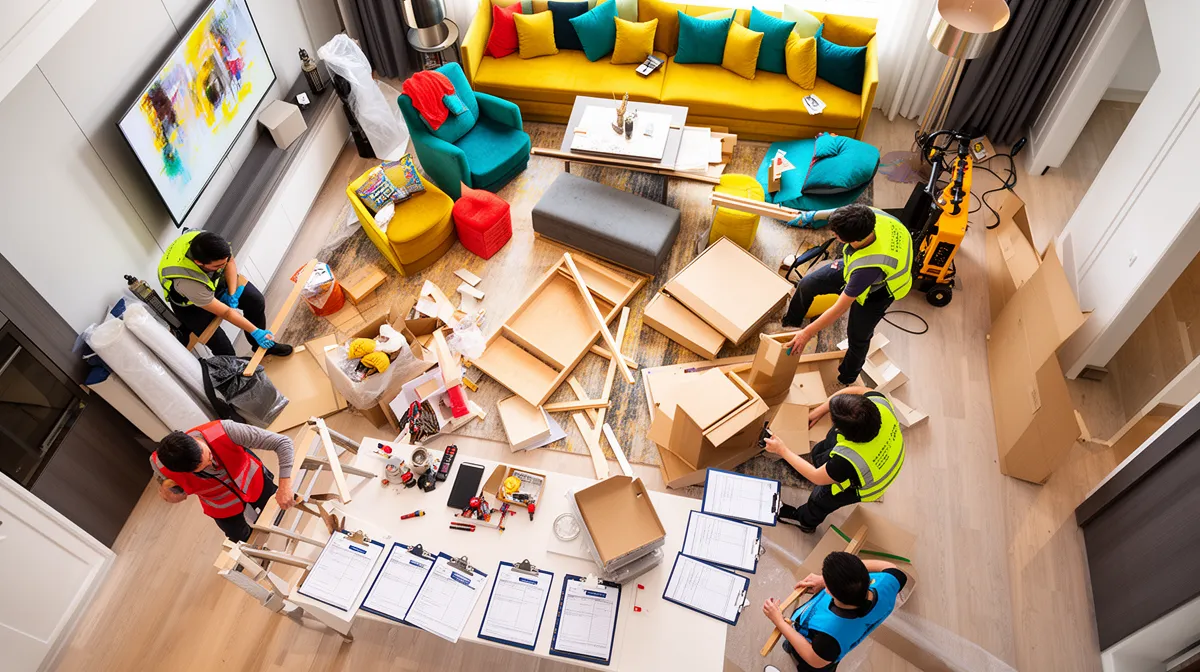
Operators managing multiple units across London or Manchester often cobble together furniture from several local vendors chasing apparent savings. The coordination overhead, multiple invoices, mismatched delivery windows, and inconsistent quality control across units quietly eat into every pound saved on the headline rate.
Manual inventory management makes this worse: without unit-level asset tracking, audits turn costly and error-prone, a growing compliance risk for institutional portfolios.
Why speed promises without operational infrastructure fail at scale
Rigid contract terms are the second trap. Most commodity hire providers lock operators into fixed periods that ignore seasonal occupancy cycles entirely, meaning overpayment during low-demand months is simply baked into the model. Delivery without professional assembly pushes liability back onto the operator, creating damage claims and maintenance backlogs that build up quietly.
- Fragmented sourcing creates hidden coordination, invoicing and quality-control costs
- Rigid terms don't flex with occupancy cycles, operators overpay during low periods
- Delivery without professional installation shifts maintenance liability onto the operator
- Manual inventory management makes multi-unit audits costly and error-prone
Pan-European operators relying on patchwork local suppliers face a third risk: brand and quality inconsistency that surfaces at exactly the wrong moment, during a client inspection or a portfolio audit, and these are structural market issues, not isolated supplier failures. Fixing them requires digitally governed FF&E delivery and transparent, predictable cost structures built around your operational model from the outset.
How to Evaluate and Commission a Furniture Rental Delivery and Setup Service for Your Portfolio
The briefing checklist every procurement team should use
Most commissioning failures happen before a single item is ordered. Before approaching any furniture rental delivery and setup provider, your procurement team needs five things nailed down: unit count and typology (studio, one-bed, two-bed), required occupancy date, commercial model preference (rental, lease-to-own, or outright purchase), maintenance and replacement expectations, and end-of-contract removal scope.
Without these, supplier proposals become incomparable, and hidden operational costs surface later.
- Define unit count and typology before any supplier conversation
- Confirm required occupancy date to test delivery capability against real timelines
- Specify commercial model preference upfront to align contract structures
- Ask suppliers to evidence past delivery performance, not just marketing claims
- Confirm maintenance, replacement, and removal are included in contractual scope
Working with Myotaku, from catalogue to move-in ready
Myotaku's consultative model is built around operational certainty, with a focus on digital governance, QR-coded inventory, and auditable unit-level tracking to meet the growing needs of managed real estate. From initial brief, procurement teams access a catalogue of 10,000+ items, select packages aligned to unit typology, and move directly into digitally governed FF&E delivery, with operational readiness within 48 hours and zero downtime furnishing across the portfolio.
QR-coded inventory keeps every unit auditable from day one.
For operators managing multiple units across London, Manchester, or Birmingham, that combination of speed, traceability, and flexible commercial models removes the operational risk that fragmented local sourcing typically introduces. Explore Myotaku's approach at myotaku.co.uk.
FAQ - Frequently Asked Questions
What does a furniture rental delivery and setup service typically include for a multi-unit operator?
For a multi-unit operator, a properly structured FF&E service covers far more than dropping boxes at the door. Finally, at minimum, expect procurement across all furniture categories, scheduled delivery, full installation and assembly, and a handover that leaves each unit genuinely ready for occupancy.
With Myotaku, that scope stretches to QR-coded inventory per unit, ongoing maintenance and replacement, and end-of-life removal and recycling, with no juggling three separate contractors, just one operational partner and one accountable point of contact.
How quickly can a managed FF&E service furnish a serviced apartment or BTR unit in the UK?
Faster than most operators expect. Myotaku emphasizes rapid operational readiness and turnkey furnishing for serviced apartments, BTR schemes, and PBSA, designed to minimize downtime.
That speed matters enormously when you're managing lease-up pressure or recovering a unit between tenancies. I've seen fragmented local sourcing add weeks to a timeline that a well-structured FF&E partner compresses into two days.
The difference is pre-configured procurement and a logistics model built around occupancy cycles, not around supplier convenience.
What is the difference between renting, leasing-to-own and purchasing furniture for a real estate portfolio?
The short answer: it's a capex versus opex decision, and the right answer depends on your hold period, occupancy model, and balance sheet strategy.
As a result, rental converts furniture spend into a predictable operational cost, preserves capital, and keeps you flexible when units turn over or portfolios change. Lease-to-own suits operators who want to eventually own the asset without the upfront capital hit.
Outright purchase makes sense for long-term, stable schemes where depreciation works in your favour. On the other hand, Myotaku supports all three models, and can structure a mix across a single portfolio if that's what the numbers require.
How does digitally governed inventory management benefit BTR or serviced apartment operators?
Audit trails, accountability, and scale. When every item in every unit carries a code linked to a digital catalogue, your team stops guessing what's where and starts managing with actual data.
For example, for BTR operators running 200-plus units across multiple sites, that means maintenance requests get resolved faster, replacement cycles become predictable, and end-of-tenancy checks don't rely on memory or paper logs. And the result?
Fewer disputes, lower replacement costs, and a compliance record that satisfies even the most demanding asset manager or institutional investor.
What should a procurement team look for when comparing furniture rental providers across multiple UK cities?
Consistency is the thing most procurement teams underestimate until they've been burned by it. Above all, a provider who performs well in London but subcontracts delivery in Manchester, Leeds, or Birmingham introduces exactly the operational variability you're trying to eliminate.
Look for pan-national coverage with a single service standard, not a patchwork of regional suppliers stitched together. Alongside that: transparent, predictable cost structures with no hidden charges, flexible commercial models that adapt to your occupancy cycles, and a digital inventory layer that gives your team visibility at unit level.
Myotaku operates across the UK with consistent delivery standards and a broad catalogue of items, offering commercial flexibility across rental, lease-to-own, and purchase options. Worth a conversation via myotaku.co.uk if you're benchmarking providers.
Choosing a Furniture Rental Delivery and Setup Service That Works as Hard as Your Portfolio Does
The difference between a furnishing vendor and an operational partner shows up not in the catalogue.
But in what happens when a unit needs to be ready in 48 hours and nobody has time to manage the process. Subsequently, speed, scope, governance, flexibility and cost transparency aren't separate features. They're the five pressure points where a furniture rental delivery and setup service either holds or fails under real asset management conditions.
Myotaku is built around those five points, not as a checklist, but as an integrated operating model designed for serviced apartments, BTR portfolios, relocation programmes and staging pipelines that can't afford downtime or ambiguity.
However, if you manage a portfolio with recurring furnishing requirements, the right conversation isn't about products. It's about what operational certainty is worth to your business.
Visit myotaku.co.uk Visit myotaku.co.uk to outline your portfolio requirements and explore how Myotaku can serve as your FF&E partner across the UK, Switzerland and Germany.
Operational readiness isn't a luxury, it's the baseline your assets deserve.